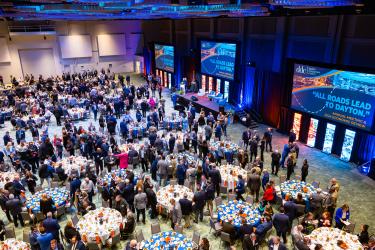
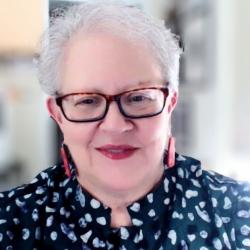
 Destination Dayton is excited to offer the second guest blog from noted meetings industry expert Joan Eisenstodt. Joan is a pioneer and a trendsetter in the meeting, convention, and exhibition industry. During her career and consultancy, she has helped clients with, and taught others about, conference planning and management support, with focus on ethics, contracts, risk management, and better learning methods. Joan has been honored by MPI, PCMA, PCMA Foundation, HSMAI, and NSA, and as a 2004 inductee into the Events Industry Council Hall of Leaders, considered the industry's highest honor. We thank her for being willing to offer our readers her experience and insights.
Read part 1 of Joan's series here
Getting Started
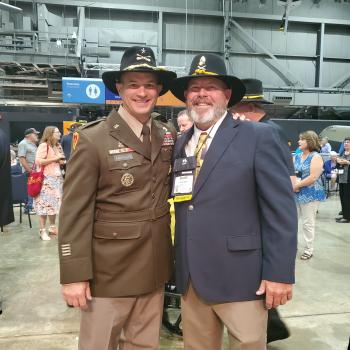
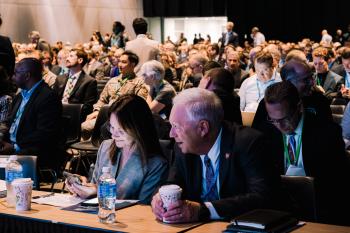 Meetings and events begin with an idea, goals, and proscribed by bylaws or tradition or connected to other events, dates, or time of year. Once goals and date parameters are determined, the budget is the next important aspect to guide where those planning events will begin to search for destination (city) and site (hotel, convention center, restaurant, off-site venue like a museum, or near a venue of importance (such as military museum or base, craft or art museum) to those who will gather).
Experienced event professionals often have checklists to use for their requests for proposals (RFPs); others newer to planning an event may be less sure what to ask. For years in the meetings industry, “rates, dates, and space” were all most considered. As the industry became savvier, checklists and questions became more detailed based on an individual’s or organization’s experiences.
Destination Dayton’s website, like those of many US and world cities includes resources to help you. Certainly from my early days in Dayton planning, at age 7, fund raisers for polio research, working in my 20s with the Dayton Art Institute on city-wide events, to working as a meetings consultant after moving to Washington, DC, and depending on a client’s specifications, the detail in RFPs developed were very different!
Destination Dayton, better than most Destination Marketing Organization (DMO) websites I’ve seen, provides resources to help event planners ensure those who will attend meetings and events have a sense of belonging, knowing they are welcome.
During my 50 years of consulting, I have helped clients – associations, military reunions, corporations, foundations – create RFPs to select where and how to hold meetings and events, checklists expanded and required specificity that would help meet their goals, participants’ preferences, budgets, and information that would ultimately be contracted, and meetings run smoothly and safely. (I’ll write about risk and contingency anticipation and preparation in a future blog. It is a subject on planners’ and venues’ minds after the events of April 25, 2026, at the White House Correspondents Association dinner.)
This, part one of multi-parts, provides some areas often overlooked when creating RFPs and conducting follow-up site inspections. Even experienced planners, whether volunteer, third-party, consultant, or employee, can become complacent and think if they had held a meeting in the same brand-named hotel that one in a different or even the same city would be the same. It’s possible and not likely depending on hotel or venue ownership and location.
Following is a starter checklist of what to provide to the CVB/DMO or hotel or other venue. Destination Dayton has a good RFP format to which you may add and ask for more information at the start or upon receiving initial proposals. You may also choose to use an e-RFP provided by several companies. Check to ensure you provide at least what they ask. Add information specific to the destination, site, and your program and participants. The more robust the information you provide, the better the proposal and eventual contract and meeting.
What To Provide in a Meeting/Event RFP
 Meeting goals and objectives: Detail why the meeting is being held and what is critical for a specific and positive outcome. It may be networking which during COVID-19 restrictions were complicated at six feet apart. If it is education or a trade show, the spaces and times needed for set-up, open, and move-out; space and set up to accommodate speakers, staging, and audio-visual equipment; set up for food and beverage events (receptions, buffet, or sit-down meals.)
Demographics: Expected or planned for total numbers (including volunteers, staff, speakers, audio visual personnel), age ranges including any accompanying family or guests, gender percentages, known and anticipated disabilities, and accommodations required. Destination Dayton refers to this as “Attendee Profile.” Even for events previously held in the same destination, your anticipated audience for which the current RFP is written may have changed (people at least aged!) and the program, goals, and disability accommodations, among other details.
Preferred days/day pattern and dates: Note pre-arrivals (staff and/or key volunteers, participants who want to explore the destination, speakers) and possible post-stays, and as critically, days/day patterns and dates that will not work. Cities and venues may provide, if groups do not specify, what they have available, which may not work for your group. It is always best to check calendars for the destination for local event conflicts, and to know your group and the holidays (including school holidays) they may wish to avoid.
Rates desired: State what, based on the group’s history or anticipated attendance, for varied occupancy: single (1 person), double (2 people), triple and quadruple which may require additional bedding. Be as specific in the RFP as possible. When stating desired rates, state if Inclusive (of taxes, fees) or Exclusive (of all taxes, fees.)
Room and Bedding Types Needed: Hotels have a variety of room types with one bed (usually a double, queen, or king) or two beds (either two double or two queen beds, sometimes 1 or 2 beds plus a sleeper sofa). If your group may require additional bedding (sleeper sofa in the room or added rollaway beds or cribs) learn the availability, if owned or rented by the hotel, how they physically will fit in the rooms, and cost to the group.
Many groups’ participants share rooms to save costs. Those sharing want appropriate bedding; not all “share-withs” sleep in the same bed. The mix of bedding needed will be based on history and knowledge of your group.
By law, hotels must provide a percentage of accessible guest rooms. If you have not read the Americans with Disabilities Act, or have not recently, and specifically this section, do so. Hotels are to disperse the accessible rooms throughout, not isolated on one floor. Often those who need an accessible room may not need it to have a roll-in shower or other mobility features. Rather, accommodations for people who are deaf or hard of hearing, or blind or have low vision, or accommodations that are quiet for those who are neurodiverse, are required. A connecting room for an aide or a family member may be desired for someone requiring an “ADA room.” A few useful resources include these: Paralyzed Veterans of America and this, inclusive for more than mobility disabilities.
I rarely assume except this: The percentage of disabled people [in the communities of disabled people, “people first” is not always preferred] in the US and world populations is increasing with age and for some because of military service or ill health, like long COVID.
It is rare in the United States to find hotels with “smoking” guest rooms – that is, where a guest may smoke tobacco or other substance, or vape. If your group includes those who may, ask the policies and charges for those who violate the policies and advise your participants.
Phew! That’s just a start. In the next installment, I will detail more areas of questions to ask. Until then, stay well and safe. Write to me with questions at my email joanleisenstodt@gmail.com (noting on the subject line “Destination Dayton”) or through Destination Dayton via info@destinationdayton.org or its social media channels.
If you want to learn more about this topic, be sure to also watch the on-demand recording of my recent Meetings Today webinar.
Destination Dayton thanks Joan for sharing her many decades of meeting planning experience with our readers! She will respond to questions asked in her upcoming blogs. Note that her advice will be that of a meeting professional and not of a lawyer for any legal advice even though she became, and was, for 30 years of her career, an expert witness in meetings industry legal disputes. She will provide resources for more information about contracts, general guidelines, and items to add to your checklists for planning and managing meetings and events from the experiences she and colleagues have had.
Want to learn more about planning a convention, meeting or event in Dayton? Ready to submit your RFP? Visit the meetings section of our website for more information.